Mold Removal Services in Maryland
- IICRC Certified
- 24/7/365 Response
- Insurance Billing
- Since 2009
Get A Free Quote
Mold Removal Services in Maryland | Flood Department
When mold is discovered in your Maryland home or business, physical removal of contaminated materials is an essential part of the restoration process. Flood Department provides safe, certified mold removal services across Frederick, Montgomery, Howard, Baltimore, and Carroll Counties. Our IICRC-certified technicians follow strict containment and safety protocols during all removal work, ensuring that mold spores are not dispersed to unaffected areas of the property. Post-removal air quality testing confirms that the work meets clearance standards before the project is declared complete. Whether you need targeted removal of a localized problem or extensive remediation of multiple areas, Flood Department delivers thorough, documented results.
Mold Removal vs. Mold Remediation Understanding the Difference
These terms are often used interchangeably, but they describe different scopes of work. Mold removal refers specifically to the physical act of removing mold-contaminated materials from a property — cutting out affected drywall, removing saturated insulation, disposing of contaminated building components. Mold remediation is the complete protocol that includes assessment, containment, removal, surface cleaning, antimicrobial treatment, air scrubbing, and post-remediation clearance testing. Removal is one phase within remediation. In most cases involving active mold growth, full remediation following IICRC S520 standards is the appropriate response.
Safe Mold Removal Process
Flood Department's mold removal process follows a structured sequence:
Pre-removal assessment to determine the full extent of affected materials
Containment establishment prior to any physical work
HEPA vacuuming of surfaces to be removed, minimizing spore dispersal
Physical removal of mold-affected drywall, insulation, flooring, framing sections, or other materials
Double-bagging and controlled removal of all contaminated materials through the containment pathway
Antimicrobial treatment of remaining structural surfaces
Air scrubbing throughout and after removal
Containment Zones During Removal
Physical containment barriers isolate the removal zone from the rest of the property before work begins. Polyethylene sheeting seals doorways, HVAC vents, and any openings in the work area. Entry and exit are through a controlled zipper panel. Negative air pressure is maintained so that any airborne spores move toward the exhaust rather than toward clean areas of the property. Containment remains in place until post-removal air quality testing confirms clearance.
Full PPE Requirements
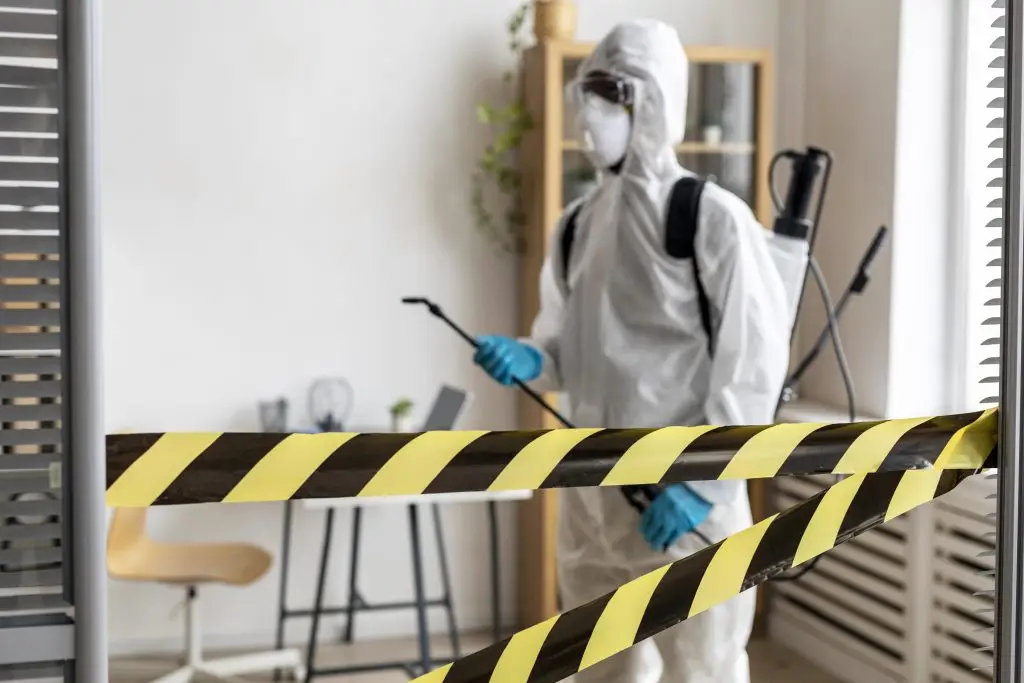
Technicians performing mold removal work wear full personal protective equipment including N95 or higher-rated respirators, disposable Tyvek suits, nitrile gloves, and eye protection. PPE is removed within the containment zone before exiting to prevent spore transfer to clean areas. P100 half-face respirators are used in higher-concentration environments.
Post-Removal Air Quality Testing
Following removal and antimicrobial treatment, air samples are collected within the former work area and in adjacent spaces. Samples are sent to an accredited laboratory for analysis. Clearance is confirmed when mold spore concentrations are at or below outdoor background levels and no elevated concentrations of the original species are present. Third-party clearance testing provides independent verification that is required by many insurance carriers.
When Each Approach Is Appropriate
Targeted removal without the full remediation protocol may be appropriate for very small, isolated mold problems in non-porous materials where no structural penetration has occurred. Full remediation is required when mold covers more than 10 square feet, when growth is present in HVAC systems, when contamination extends behind walls or into structural cavities, when occupants have health sensitivities, or when insurance documentation is required.

Insurance Billing and Documentation
Flood Department works directly with all major insurance carriers and uses Xactimate-aligned pricing. We document mold and moisture damage thoroughly from day one, provide inspection reports and remediation logs, and handle direct insurance billing so you can focus on recovery instead of paperwork.
Related Mold Services
Mold Remediation Services
IICRC S520-certified mold remediation with containment and clearance testing.
Professional Mold Inspection
Moisture mapping, thermal imaging, and professional mold inspection.
Mold Damage Restoration
Full-service mold damage restoration across central Maryland.
Water Damage Restoration
Water damage restoration to stop moisture before mold spreads.
Contact Us
Available Now
Frequently Asked Questions
What is the difference between mold removal and mold remediation?
Mold removal refers to the physical removal of mold-contaminated building materials. Mold remediation is the complete process that includes assessment, containment, removal, surface decontamination, antimicrobial treatment, air scrubbing, and post-remediation clearance testing. For most active mold situations, full remediation is required to ensure lasting results and meet insurance documentation standards.
Can all types of mold be completely removed?
Yes — mold growth on non-porous materials such as glass, metal, and hard plastic can be cleaned and disinfected. However, porous materials like drywall, insulation, and carpet that have been colonized by mold typically cannot be fully cleaned and must be physically removed. Flood Department assesses each material type to determine whether cleaning or removal is the appropriate response.
Is black mold more dangerous than other types of mold?
"Black mold" commonly refers to Stachybotrys chartarum, a moisture-loving species associated with water-damaged cellulosic materials. While Stachybotrys is associated with mycotoxin production, all mold growth in a living space poses potential health risks, particularly for sensitive individuals. Color alone is not a reliable indicator of mold species — laboratory testing is required for accurate identification. Flood Department treats all confirmed mold growth with equal rigor regardless of species.
How do you safely contain mold during removal?
We establish polyethylene containment barriers before any removal work begins, sealing the work area from the rest of the property. Negative air pressure machines maintain directional airflow toward HEPA-filtered exhausts, ensuring spores move outward rather than into clean areas. All personnel wear full PPE and decon before exiting. Containment remains in place until post-removal clearance testing confirms acceptable air quality.
What air quality testing is done after mold removal?
Post-removal air sampling is collected from inside the former work area and from adjacent spaces using viable and non-viable spore trap methods. Samples are analyzed by an accredited third-party laboratory. Clearance is established when results show mold spore concentrations at or below outdoor background levels with no elevated presence of the previously identified species. This documentation is provided to you and your insurance carrier.
What Our Customer Reviews Say
Real reviews from Maryland homeowners and businesses who trusted Flood Department with their restoration.
Years serving Maryland homeowners and businesses since July 2009.
24/7
Emergency response every day of the year — nights, weekends, and holidays.
Cities and communities served across central Maryland from two local offices.
IICRC
Certified technicians trained and tested to the highest industry standards.
Don't Wait — Call Flood Department Now.
Call Flood Department at (301) 829-2600 for professional mold removal services in Maryland. We serve Frederick, Montgomery, Howard, Baltimore, and Carroll Counties, available 24 hours a day, 7 days a week. Our certified technicians are standing by right now across Frederick, Montgomery, Howard, Baltimore, and Carroll County.
contactus@flooddept.com | Available 24/7/365